
In short
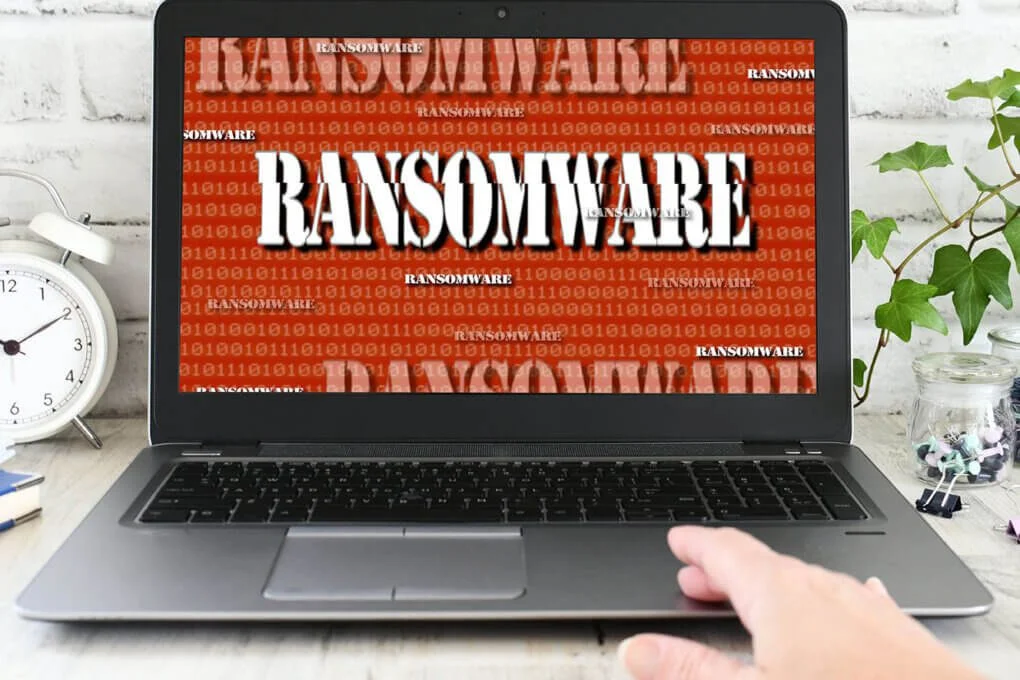
Ransomware attacks steal your business info and sensitive data and then blackmail you into paying them money so you get back access to your company data. Worldwide, 72% of businesses were affected by ransomware cyber attacks.
Ransomware attacks steal your business info and sensitive data and then blackmail you into paying them money so you get back access to your company data. Worldwide, 72% of businesses were affected by ransomware cyber attacks. If you think your business is too small or uninspiring for cyber threats, perhaps you should reconsider.
Ransomware attacks have emerged as a formidable threat to data cybersecurity. These malicious software attacks encrypt a user’s data, demanding payment for its release. The best way for companies and organizations is to protect their data and stop cybercriminals from surpassing the first line of defense. There are things that can be done at an organization level and others from your IT department or your managed IT services provider.
Understanding Ransomware
Ransomware is a type of malware that locks users out of their systems or encrypts their data, making it inaccessible. The attackers then demand a ransom, typically in cryptocurrency, for the decryption key. When the ransom is paid, they usually give access back to victims, who often find themselves in a precarious situation.
The evolution of ransomware has seen it becoming more sophisticated. Cybercriminals attack not only individual users but also small and large businesses and corporations as well as government agencies. Many times, even after paying the ransom, the data that is finally retrieved is corrupted or cant be used. The time and effort it takes for a business to recover from a ransomware attack is often more expensive than the actual ransom demanded. Therefore, Ransomware Protection Services measures are crucial.
Preventive Measures
Regular backups
Among the best practices to prevent ransomware attacks is backing up data regularly. You can use your backup if you lose access to your data so that your company can keep going.
It’s important to store backups in separate locations, both on-premises and cloud, such as an external hard drive or cloud storage, which must be not connected to the main network.
Updates and patches
Your IT department or managed IT service provider must keep all software, including operating systems and antivirus programs, up to date. Cybercriminals are constantly updating their cybersecurity tools for more sophisticated attacks. Software updates often include patches for security vulnerabilities that ransomware could exploit.
Network segmentation
Divide the network into smaller, separate segments to limit the spread of ransomware if one segment is compromised. By restricting access between segments, you effectively contain the threat, preventing it from infiltrating the entire network. You only have to regain access to one compartment rather than your whole business operation. Implementing such segmentation acts as a proactive measure to minimize the potential impact of ransomware infection.
The Zero-Trust security model
Another useful preventative measure is a zero-trust approach to network security. This model operates on the principle of never trust, always verify, meaning that every request for network access is treated as a potential threat until verified.
Preventing ransomware attacks requires strict identity verification for every person and device trying to access resources on a private network.
Advanced Threat Protection (ATP) Solutions
Advanced Threat Protection (ATP) solutions provide comprehensive protection against sophisticated malware and ransomware attacks. These solutions often include features like behavioral analysis, anomaly detection, and machine learning capabilities to identify and respond to threats more effectively.
Implementing robust endpoint security measures can help you safeguard against a wide array of cyber threats and ensure the integrity of an organization’s network.
Email filtering and security
Since phishing emails are a common entry point for ransomware, IT departments should implement advanced email filtering and security measures. These solutions can detect and block malicious emails before they reach the end-users, thus reducing the risk of a successful ransomware attack.
Controlled use of administrative privileges
When you limit administrative privileges, you can reduce the risk of ransomware spreading across the network. Users should only be given the access necessary for their role, and admin accounts should be used sparingly. This approach leaves less vulnerability for cybercriminals to access.
Employee education and awareness training
In many cases, ransomware enters a system through phishing emails or social engineering. Managers should educate their employees about these tactics to reduce the risk.
Dont click on unsafe links
We cant stress this one enough. Employees should only click on safe links from reputable and known senders. Anything that looks suspicious and untrustworthy should be deleted immediately. Raise awareness about deceptive URLs and what they look like.Â
Dont open suspicious email attachments from unknown senders
This is another crucial one. Unknown senders sending email attachments should raise an alarm. Advise your employees to consider the sender and the type of attachments. If anything looks suspicious, train them to delete it right away.
Dont disclose personal information
Employees should never disclose personal information to strangers or people asking them about their personal details over an email. People typically use such personal details in their passwords, so this could give cybercriminals access to the whole business network.
Dont use unknown USB sticks
USB sticks can contain malware that enters the company network. Coach your team to be very careful about who gives them USB sticks and how to use them.Â
Only download from trusted and dependable sources
Guide your employees to only download information from trusted and dependable online sources. If a source is questionable, advise them to avoid it.
Dont use public Wi-Fi
Public Wi-Fi is great. Its also relatively easy for cybercriminals to access because of low security. If a member of your team is working with public Wi-Fi for example, from a cafe ask them to never perform any sensitive transactions that could imperil your companys network security.
Detection and Response
While training your employees is crucial, it is no panacea. That is why you must also watch your network at all times for signs of trouble.Â
Antivirus and anti-malware tools
Use strong and reputable antivirus and anti-malware products to detect and prevent ransomware infections. These tools should be kept updated to recognize the latest ransomware signatures. Stay one step ahead of cybercriminals by being up-to-date.Â
Monitor network traffic
Monitoring network traffic for unusual activity can help in the early detection of a ransomware attack. It enables quicker response to prevent widespread damage. You can limit the damage to parts and segments of the business rather than the whole network.
Incident response team and plan
Have a dedicated incident response team and a well-defined incident response plan. This team should be trained to handle different types of ransomware attacks effectively, including identifying the attack, containing it, eradicating the threat, and recovering data.
Recovery plan
Organize a comprehensive recovery plan with your IT department or managed IT service provider. This plan should include steps to isolate infected systems, methods to restore data from backups, and procedures to report the attack to relevant authorities.
Ransomware Attacks Can Be Prevented
Protect your organization against ransomware: strengthen defenses, shrink the attack surface, and never succumb to ransom demands. Ransomware poses a significant threat, but you can take proactive measures to limit vulnerability and protect yourself, even in case of a cyber-attack.Â
As you saw, there are several preventative ways for individuals and organizations to safeguard their data. It’s a continuous process that involves staying informed about the latest ransomware threats and adapting defense strategies accordingly. Additionally, securing remote desktop protocol (RDP) access is crucial to fortify defenses against unauthorized access.
The best way to protect your business livelihood is to hire a professional managed-IT service like Corporate Technologies who will build up and monitor your network for any ransomware attack. Act now and secure your business against ransomware attacks!
Keep reading
More in Security →
Cybersecurity Insurance in Maryland: What Carriers Now Require from Your IT Infrastructure
Learn what cybersecurity insurance carriers require from Maryland businesses and how managed IT services help meet security controls, compliance, and audit expectations.

Cyber Insurance Requirements in Illinois: What Underwriters Ask For in 2026
What Illinois businesses need for cyber insurance: MFA, EDR, immutable backups, email security. Plus the Illinois laws behind the exposure and policy…
Dental Ransomware Incidents: What Actually Happens
Learn how ransomware attacks dental offices, what happens during an attack, and how backups and security can help you recover safely.
Free, same business day
What would managed IT cost for your team?
Tell us how many computers and users you have. An engineer sends a per-user range, usually the same business day. No credit card, no bot.
- Live service specialist in about a minute, 24/7
- 21 offices across 18 states
- 60-day money-back guarantee
Get your instant IT support estimate
Tell us how many computers and users you have and we send a per-user range, usually the same business day.