For over 40 years, we have helped thousands of businesses with their IT solutions for lasting success. We provide personalized IT solutions tailored to your diverse business needs.

Contacts

Minneapolis, MN

(952) 715-3600

San Diego, CA

619-853-3744

Hollywood, CA

323-435-1318

Sacramento, CA

916-352-8792

Boise, ID

1-800-381-9383

Rio Rancho, NM

505-219-1694

Tulsa, OK

(918) 508-2228

Conway, AR

501-329-1238

Harvey, LA

504-502-1550

Chicago, LA

312-284-3219

Grand Rapids, MI

616-727-8260

Vernon, OH

740-638-0883

Frederick, MD

301-867-7128

Reston, VA

757-982-8986

Fairfield, NJ

973-604-0655

Fargo, ND

701-354-2979

Iowa

1-800-830-0112

Kansas

913-382-2823

Florida

561-693-1382

Managed Services

Maximize your business’s efficiency with expert-managed services tailored to meet your unique needs. This category explores essential topics like network monitoring, IT support, cloud solutions, and cybersecurity. Learn how leveraging managed IT services can reduce downtime, enhance security, and optimize your overall IT infrastructure, allowing you to focus on growth.

IT Solutions Managed Services Onsite support
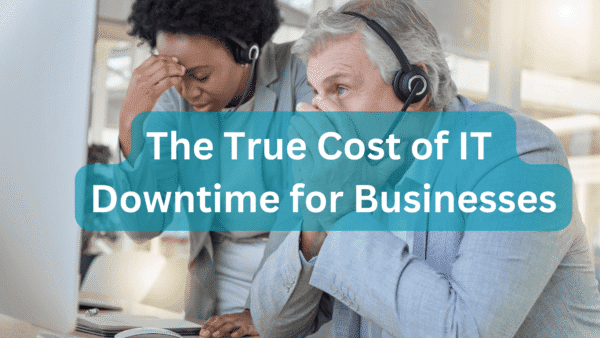
Stressed workers, IT downtime cost.

The True Cost of IT Downtime for Businesses

Modern business operations across all industries depend on IT infrastructure to serve as their fundamental base. IT systems enable businesses to manage their financial transactions while they ensure effective communication and maintain customer services which drives their success. When IT systems encounter failure the resulting consequences turn into disastrous. IT system failures disrupt business operations while inflicting substantial financial losses and damaging the company’s reputation. Businesses that wish to secure their operations and sustain competitiveness in an advanced technological landscape must evaluate the actual costs associated with IT system outages. This guide will help you to cover the definition of IT downtime and strategies to manage it effectively. Understanding IT Downtime and Its Impact The time when IT systems, applications, or networks become unavailable is known as IT downtime which interrupts business operations. Downtime impacts extend well past temporary inconveniences. The consequences of IT downtime disrupt business productivity and revenue while undermining customer trust and compliance with industry regulations. If you run a business in a competitive market you may face huge damages to your competitive edge when your business experiences extended downtime. Understanding IT Downtime and Its Causes IT downtime happens when systems or networks stop working, which can disrupt business operations. It can be divided into two main types: Planned Downtime: This is scheduled by businesses for system updates, maintenance, or improvements. Although it temporarily stops operations, it is managed carefully to reduce disruption. Unplanned Downtime: This happens without warning and often causes more damage. It includes unexpected problems such as: Unplanned downtime is unpredictable and can cause major losses for businesses. Being prepared with strong systems and recovery plans can help minimize the impact. The Financial Impact Both direct financial costs and indirect ones occur due to IT downtime incidents. Direct costs stem from instant revenue loss and lowered employee work efficiency together with system repair and replacement expenditures. For example: During peak sales hours an e-commerce platform faces downtime and loses thousands of dollars per minute from abandoned transactions. Indirect downtime can also cause serious problems, even if they aren’t always obvious. It can harm a company in three key ways: damaging its reputation, upsetting customers, and leading to legal troubles. When a company fails to deliver services or products, it loses customer trust, which can hurt revenue in the long run. Additionally, if a business doesn’t follow industry rules during downtime, it risks facing fines and legal issues. Calculating the Cost To understand the true cost of IT downtime, businesses must consider both tangible and intangible factors. Tangible costs include lost revenue, reduced productivity, and recovery expenses. For example, if a company generates $5M in annual revenue, operates 2,000 hours annually, and experiences three hours of downtime, it stands to lose $9,300 in combined revenue and productivity losses. To calculate downtime costs, follow these steps: Lost Revenue: Lost Productivity: Total Cost: By accurately assessing these costs, you can prioritize investments in preventive measures, including advanced IT systems, employee training, and disaster recovery plans. If you need any help with this calculation, just contact us at Corporate Technologies, or use our IT Services calculator tool and we will sort out your matter. Preventive Measures Preventing IT downtime requires a proactive approach that combines regular maintenance, robust cybersecurity measures, and comprehensive disaster recovery plans. Regular maintenance ensures that hardware and software remain in optimal condition, reducing the risk of unexpected failures. Cybersecurity measures, such as firewalls, antivirus software, and employee training, help protect systems from external threats. A disaster recovery plan provides a roadmap for responding to outages, ensuring that critical systems are restored quickly. This includes maintaining up-to-date data backups, implementing redundant systems, and conducting regular recovery drills to test preparedness. Impact on Different Industries The consequences of IT downtime vary across industries, reflecting their unique operational demands. In the finance sector, even a few minutes of downtime can result in massive monetary losses and regulatory scrutiny. Financial institutions rely on real-time data processing and secure transactions, making uptime critical. In healthcare, downtime can delay access to patient records and diagnostic tools, potentially putting lives at risk. Manufacturing companies face production delays and supply chain disruptions when IT systems fail. These industry-specific challenges highlight the need for tailored strategies to mitigate downtime risks. Is “Five-Nines” Availability Possible? “Five-Nines” availability means a system works 99.999% of the time, allowing only 5 to 15 minutes of downtime per year. It’s a tough goal, but industries like healthcare, finance, and cloud computing aim for it because even small outages can cause big problems. How to Achieve It? Role of Real-Time Data Platforms Real-time data platforms help by: Why It Matters Achieving “Five-Nines” ensures systems run smoothly, customers stay happy, and businesses avoid costly interruptions. It’s challenging but worth the effort! Regulatory and Compliance Issues Compliance with legal and regulatory frameworks is essential for mitigating downtime risks. Non-compliance can result in hefty fines, legal action, and reputational harm. Adopting these frameworks not only ensures legal adherence but also strengthens overall IT resilience. Businesses that prioritize compliance are better equipped to prevent downtime and respond effectively to unexpected challenges. Our IT Downtime Prevention Services At Corporate Technologies, we provide comprehensive IT solutions to help businesses minimize downtime, enhance productivity, and protect their reputation. Our goal is to ensure your IT systems run smoothly, so you can focus on what you do best—growing your business. Proactive Monitoring and Maintenance We offer 24/7 monitoring of your IT systems, including hardware, software, and networks. Our team identifies vulnerabilities and potential threats before they become major issues, ensuring uninterrupted operations. Regular maintenance keeps your systems in optimal condition and reduces the risk of unexpected failures. Advanced Cybersecurity Solutions Protect your business from cyber threats with our cutting-edge security tools and strategies. We provide: Our team at Corporate Technologies ensures your systems are secure, so you’re always one step ahead of cybercriminals. Customized IT Solutions and Compliance Support We provide comprehensive IT support to ensure compliance by securing systems and offering tailored solutions. Our customized

Managed Services
Largest IT Managed Services Providers

Largest IT Managed Services Providers

Managed Services Providers (MSPs) are third-party companies that remotely manage a customer’s IT infrastructure, end-user systems, and other technology-related services. They operate on a subscription or service-level agreement (SLA) basis, ensuring predictable costs and consistent service delivery. Usually, the agreement covers specific areas and tasks that need to be delivered, as well as some key performance indicators that have to be met. MSPs allow businesses to outsource IT operations with tailored services that offer cost efficiency, enhanced security, and proactive maintenance, ensuring stability and reduced downtime for clients. Top 9 IT Managed Services Providers With many companies going digital nowadays, many organizations have decided to tap MSPs in their operations. This trend has paved the way for many MSPs to expand and be successful in their field. Here’s a shortlist of the largest IT managed services provider in the market today. 1. IBM IBM provides a wide range of managed services, including hybrid cloud management, AI-driven automation, advanced cybersecurity, and disaster recovery solutions. It leverages partnerships with major cloud providers like AWS, Microsoft Azure, and Google Cloud to deliver multi-cloud strategies. It integrates AI and blockchain technologies to enhance efficiency, security, and sustainability. 2. Accenture Accenture is a global leader in managed services, offering hybrid cloud management, IT infrastructure modernization, and AI-driven customer experience solutions. It integrates generative and agentic AI for predictive maintenance and enhanced workflows, while also providing end-to-end supply chain, cybersecurity, and sustainability-focused circular supply chain solutions. 3. Infosys Infosys, a global leader in digital services, reported significant growth in 2025 driven by its AI-driven solutions, cloud-native platforms, and automation tools. Its managed services include digital workplace transformation, hybrid cloud management through Infosys Cobalt, and industry-specific solutions such as the Finacle Data and AI Suite for banking, integrating generative AI and automation for enhanced operational resilience. 4. Cognizant Cognizant leverages its Neuro® AI platform to deliver AI-driven managed services, focusing on modernizing IT infrastructure, enabling cloud migration, and optimizing business processes. Its investments in generative AI and the ‘Rewire Business for AI’ initiative help enterprises enhance customer experiences, automate processes, and achieve operational resilience. 6. Wipro Wipro operates across diverse markets, offering managed services that include cloud-enabled solutions, AI-driven automation, and cybersecurity. Its offerings focus on hybrid cloud management, business process transformation, and consulting-led digital transformation while investing in emerging technologies like quantum computing and sustainability initiatives.  7. Softchoice Corporation Softchoice Corporation delivers managed services focused on cloud solutions, digital workplace transformation, and software asset management. It specializes in cloud migration, adoption, and cost optimization, with strong partnerships as an Advanced AWS Consulting Partner and Google Cloud Premier Partner. Following its 2025 acquisition by World Wide Technology, Softchoice has expanded its capabilities in cloud governance, automation, and digital transformation. 8. HCL HCLTech, a global leader in IT services, has grown its brand value to $8.9 billion in 2025, driven by its focus on AI, cloud, and sustainability. It offers comprehensive managed services—including multi-cloud strategies, AI-driven automation, and advanced cybersecurity solutions—with innovations in generative AI and sustainability ensuring an adaptive, digital-ready IT infrastructure. 9. Carousel Industries Now operating as NWN Carousel, the company serves enterprise and public sector clients with AI-powered managed services, including cloud communications, cybersecurity, and intelligent workplace solutions. Recognized on CRN’s 2025 MSP 500 list, NWN Carousel focuses on outcome-based service delivery and leverages innovations like AI-driven virtual agents and Low Earth Orbit (LEO) satellite services. Corporate Technologies Corporate Technologies is a leading provider of managed IT services with multiple locations across the United States, including Minnesota, Arkansas, Michigan, Minneapolis, North Dakota, Idaho, California, Virginia, Oklahoma, New Mexico, Ohio, Maryland, Louisiana and New Jersey. They offer comprehensive managed services solutions, including proactive IT support, network monitoring, and cloud services, tailored to meet the needs of businesses of all sizes.

Managed Services Onsite support
Co-managed IT services; convenient.

The Benefits of Co-Managed IT Services for Growing Companies

The managed IT services industry has become integral to enabling businesses to migrate to technology transformations, implement cloud storage, and use cutting-edge third-party tools and network resources. According to one report, it is speculated that the MSP market will experience significant growth till 2028, achieving a value of over $550 billion. One of the most critical advantages offered by MSPs is that they enable businesses to propel their IT objectives while having access to skilled and professional IT resources within budget. Startups, small businesses, or any business that is quickly growing now resort to outsourcing their IT implementations and objectives to experienced and highly reputed co-managed IT services, such as Corporate Technologies. Understanding Co-Managed IT Services in a Nutshell Co-managed IT service can essentially be described as a business leveraging the expertise, resources, and IT technologies of a reputed third-party managed IT provider. Apart from the benefit of having predictable expenses for that business, it will also have the opportunity to customize its IT needs. Meaning that they will be able to determine which technology objectives should be outsourced and which ones to be implemented in-house. The general idea behind co-managed IT services is to strike a powerful collaboration between the MSP and the company where the former can help consistently optimize, scale, and support the company’s present IT infrastructure. Co-managed services aren’t exactly something new and have been around for quite some time, helping businesses that cannot afford to set up an in-house technology team or don’t have access to the right technology resources. When is it a Good Idea to Consider Partnering with a Co-Managed IT Service Provider? There can be a variety of triggers that can encourage companies (big or small) to opt for a co-managed IT service plan. These include factors such as: Lack of Adequate IT Resources and Time Management Issues One of the most problematic things about working with a small IT team is that overextending them can be highly disruptive to your operational productivity. With a small team, only a given number of projects or tasks can be completed. Delegating too many tasks and assignments to an already overworked team could result in employee burnout and inadequate outcomes. However, with a co-managed IT services plan you won’t have to worry about hiring, training, and onboarding experienced IT staff members (which can be a lengthy and costly process). You’d already have access to the MSP’s resources, tools, and manpower. You can think of co-managed IT services as a powerful supplementation of your IT team. Juggling with New Projects For a small company or a startup, nothing can be more important than embarking on and implementing new projects to maximize their growth and bottom line. However, with a small technology team and even a small number of appropriate technology tools, taking on new projects can exhaust your financial resources and your human resources. Here, partnering with a reputed co-managed IT service provider such as Corporate Technologies will be instrumental for businesses to deliver their projects on time while tackling numerous other projects simultaneously. Evolving Trends It is important to understand that technology is ever-changing and evolving. This means there is always going to be a gap in knowledge because keeping up with modern technology trends is quite difficult, especially if you’re a small operation or a startup. This is where co-managed IT services come into play. MSPs can help provide you with a powerful combination of knowledge, resources, and specialists to help fill your knowledge gaps and implement an effective and instrumental IT infrastructure for you. An Inadequate Technology Platform and Lack of Management One of the core elements of an effective and resilient technology infrastructure is a powerful management and monitoring platform. This essentially comprises a business’s cybersecurity protocols along with dedicated resources that track and monitor threats and vulnerabilities to keep their platform optimized. Small businesses and/or startups often struggle to create a reliable technology platform, which is why it is important to collaborate with co-managed IT services. These professional MSPs have access to the best cybersecurity tools and have invested in generating a resilient co-managed IT environment. Some Essential Features of Corporate Technologies as an Avant-Grade Co-Managed IT Service Provider Now that you know what co-managed IT services are and why they are important, let’s take a look at some of the best features offered by a credible MSP, such as Corporate Technologies: Incredible Advantages of Collaborating with a Co-Managed IT Services Provider Superior IT Flexibility Co-managed IT services can be wonderful for optimizing a company’s IT flexibility in terms of the scalability of services and resources. This means that the business will be able to subscribe to and pay for services that they immediately need. This also means that the organization will not have to contend with costly upfront expenses in setting up an in-house IT team or purchasing software and hardware.  The beauty of co-managed IT services lies in predictive expenses. Businesses will always know what they’re paying for and create a dedicated budget for their IT endeavors. In addition, it will also give you the added advantage of adding more agility to your long-term projects with the same co-managed IT provider without worrying about any resource limitations or constraints. The Constant Availability of Skilled IT Professionals For a small company or a startup, it can be financially daunting to spend exorbitant amounts on finding and onboarding specialist IT professionals. Plus, even if they manage to build a small team, they will always be limited to a number of projects they can tackle. And let’s not forget about the need to invest in the best software and hardware resources and tools. Building, maintaining, and running an IT team can come with compounding expenses.  With co-managed IT services, companies will have an excellent opportunity to outsource their projects to a pool of reputed third-party IT experts who will be equipped with the tools and resources and will also be able to provide a multitude of IT services such as cloud

Managed Services
Managed IT Services for Small Businesses: Your Complete Technology Solution

Managed IT Services for Small Businesses: Your Complete Technology Solution

A formidable IT infrastructure is integral to a growing business’s success and reputation. A lack of initiative or focus on implementing cutting-edge IT applications could put you at a pretty hefty disadvantage compared to your tech-savvy market rivals. However, it is just as important to mention that maintaining a solid technology environment for startups and small businesses is a stressful challenge in itself. The main obstacles that can impede a business’s technological growth are a limited budget for IT development and access to skilled and talented IT staff. This is essentially where managed IT services come into play. IT outsourcing basically comprises partnering with a reputed third-party managed services provider that takes managerial control of your IT ecosystem. This can include a plethora of vital services such as network maintenance, hybrid cloud storage transitions, 24/7 technical support, data backup, and much more. Why Small Businesses Need Professional IT Support With the increase in globalization and sharp growth in competition, it has become necessary for growing or established small businesses to collaborate with credible IT solution providers. Let’s take a look at some critical reasons why you may require professional IT support. Complications with Scalability As small businesses achieve growth, their needs for essential IT applications and resources also grow in tandem. They require quick and effective scalability solutions that must be in line with their operational requirements. However, scalability in IT ecosystems can be very costly and sophisticated and require a skilled and experienced team of IT experts. Managed IT services for small businesses provide scalable solutions that are designed to expand as the business grows. How? Well, reputed companies have access to state-of-the-art cloud technologies and are very adept at virtualization and AI-based tools. In other words, MSPs are flexible and can offer technology scalability at affordable prices with minimal downtime. Limited Access to Talented In-House IT Professionals An experienced and skilled IT team is the backbone of modern businesses. You need talented human resources to manage and optimize your IT ecosystem efficiently. However, finding and recruiting such a team can be a lengthy and expensive endeavor. Experienced IT solutions for small businesses have a powerful network of skilled IT professionals and can provide small businesses with 24/7 technical support and proactive network maintenance. They can delegate their professionals to help keep your IT systems running efficiently. Cybersecurity Issues Startups can especially be prone to cyberattacks because criminals perceive them to have a variety of vulnerabilities that the business may not be prepared to overcome. Some of the most typical cyber threats that small businesses face include malware attacks, phishing scams, and data breaches. Managed IT services can provide you with avant-garde network security protocols and solutions that commonly include proactive system monitoring, constant vulnerability detection, and a very fast incident response time. Cost Comparison: In-House IT vs. Managed Services Hiring and building a team of in-house IT specialists can come with a slew of mind-boggling upfront expenses in comparison to outsourcing your IT infrastructure to an experienced third-party company. A General Overview of the Costs Associated with Building an In-House Team Starting with IT support professionals, excluding training and onboarding costs, the average per-hour salary of IT support resources in-house can range from $25 to $350. In comparison, reputed managed IT services providers may offer you free and unlimited IT support. Moreover, an in-house IT team requires a combination of IT technicians, cybersecurity professionals, and developers. The average salary of a skilled IT technician can range from $50,000 to $65,000+ per annum. According to Glassdoor.com, the average salary of experienced cybersecurity experts can range from $113,000 – $203,000 per year. With such enormous, fixed costs (excluding benefits, stock options, etc.) it is quite easy to see why more than 90% of bigger companies opt to outsource their IT needs. Not to mention, you also have to consider additional expenses associated with quality hardware and software, bigger office space, supplies, etc. Moreover, building an in-house IT team can be time-intensive. For instance, hiring an IT professional can take over 2 months and it can take several months for your IT employees to achieve maximum productivity. Furthermore, the IT industry has an extremely high turnover rate, which can be more than 18% throughout the world. How Managed IT Services Can Help Mitigate Costs One of the most important ways that small business IT support can help reduce costs is that you will only be charged a fixed fee for the services you subscribe to. This eliminates the need for a business to hire several experts (mitigating salary costs) and keeping their overhead expenses zero. In addition, reputed MSPs may also offer free technical support and a variety of added services to maximize your productivity at lower prices. IT Outsourcing Companies Offer Comprehensive Services The following are some excellent IT solutions from reputed and experienced MSPs, such as Corporate Technologies. 24/7 Technical Support and Monitoring Having uninterrupted access to an efficient and responsive technical support unit can prove wondrous for solving both simple and complex technical issues remotely. MSPs offer unlimited and timely monitoring and tech support to keep downtime at a minimum. Not to mention, Corporate Technologies also offers IT support outside of normal business hours. Cybersecurity and Data Protection Outsourcing your cybersecurity to specialist MSPs can boost your incident response rates and prove vital in safeguarding your virtual assets from constant threats. Affordable IT support services offer a range of tailored network security solutions in line with your specific needs. Corporate Technologies evaluates your present network security protocols and provides data-backed options as to what type of security solution will work best for you instead of offering you a cookie-cutter solution. Cloud Services Management Cloud management encompasses a variety of network monitoring solutions designed for real-time tracking of a business’s cloud applications, including their security compliance, remote devices, and access controls. With an experienced managed IT services provider on your back, you’ll have the benefit of having your cloud systems consistently evaluated and monitored. In addition, you’ll also

IT Solutions Managed Services
Two men in a factory looking at something on their phone.

Four Signs Your Business Needs IT Support

Every modern business has technological needs, from an engineering firm or ad agency to a restaurant or retailer technology is always positioned as an integral facet of day-to-day operation. Whether that involves payroll management, material printing, file storage, or beyond, successful organizations simply cannot function without the utilization of modern tech.

Downloading...

Please wait while the PDF downloads