Managed Services
Maximize your business’s efficiency with expert-managed services tailored to meet your unique needs. This category explores essential topics like network monitoring, IT support, cloud solutions, and cybersecurity. Learn how leveraging managed IT services can reduce downtime, enhance security, and optimize your overall IT infrastructure, allowing you to focus on growth.
Fayetteville is one of the rapidly developing business centers in Arkansas with its combination of innovation, education, and community spirit. Whether it is the vibrant Downtown district to places close to the University of Arkansas and Mount Sequoyah, local businesses are turning to technology in order to remain competitive. Yet growth brings its own troubles, data risks, system crashes, and compliance issues that slow things down when it matters most. That’s why many turn to managed IT services Fayetteville. It just takes away the headache. You get someone watching over your systems, keeping things secure and steady. No stress, no long waits. Just smooth workdays. For local businesses trying to grow in this busy city, having the right IT support isn’t extra; it’s what keeps everything running. Local Business Pain Points in Fayetteville Despite the availability of a solid talent pool and close access to the thriving economy of Northwest Arkansas, local small and mid-sized businesses in Fayetteville continue to encounter local technology difficulties. Here are some of them: These are everyday struggles for Fayetteville’s growing mix of retail, manufacturing, and research businesses. How Managed IT Services Solve These Issues Outsourcing IT just makes sense for Fayetteville businesses. It lets them focus on real work, running the shop, managing clients, keeping things moving, while the tech side stays handled. No stress about updates, data loss, or system bugs. CT steps in as that trusted local partner, taking care of the heavy stuff. Here’s how our services fix the everyday tech troubles Fayetteville businesses deal with. 1. Security & Compliance 2. Productivity & Uptime 3. Cost Efficiency & Predictability 4. Scalability & Growth Support Across these capabilities, CT combines national-level standards with local responsiveness, giving Fayetteville businesses a technological edge without losing the personal touch. Case-Style Examples Heritage Café in Fayetteville Square Heritage Café in Fayetteville Square started as a small local spot downtown. Business was good, but their POS system kept freezing during rush hours. Orders got delayed, and customers had to wait. When they reached out to us at CT, we helped them move to Help Desk Connect™ and upgraded their network setup. After that, things changed fast; no more long waits or system crashes. Their downtime dropped by almost 80%, and everything from billing to online orders ran smoother than ever. Now, the owner says he finally has time to focus on the food, not the tech. Blue Ridge Biotech Lab near Razorback Road This small R&D lab near Razorback Road in Fayetteville was working on agricultural biotech projects with strict data rules. Their systems needed better protection and faster access to university servers. We came in with Secure Advantage™, set up encrypted storage, and added real-time monitoring. Every file, every test report stayed safe and backed up. During a recent funding review, they passed the IT audit with zero compliance issues, something they’d been struggling with before. Benefits of Partnering Locally Choosing a local provider like CT offers advantages that distant vendors can’t match: Conclusion In Fayetteville’s competitive business landscape, anchored by research, healthcare, agriculture, and innovation, companies can no longer afford inconsistent IT. With managed IT services Fayetteville, Corporate Technologies empowers local organizations with scalable, secure, and high-performance technology operations. Ready to upgrade your infrastructure and support level? Learn more about our Managed IT Services in Arkansas and see how your Fayetteville business can leverage CT’s local credibility with national technical strength. FAQs
Managed IT Services Boise for Growing Businesses Boise is changing fast. Every year, more startups, healthcare clinics, and small manufacturers pop up around the city. Tech is part of everything now. From offices near Boise State University to shops in West Bench, every business depends on technology to stay open and competitive. But with that growth comes new risks. Cyber threats, downtime, and data loss can stop everything in a second. And when that happens, small business owners in Boise feel the stress first. That’s why many companies now move toward managed IT services Boise. They want steady support, quick fixes, and some peace of mind knowing someone’s always watching their systems. Reliable IT isn’t a luxury here. It’s the difference between smooth growth and sudden disaster. Local Business Pain Points in Boise Boise looks like a peaceful city, but behind every small business, there’s always a quiet tech struggle. The local economy depends a lot on manufacturing, agriculture, healthcare, and new tech startups. Each one has its own kind of IT headache. Manufacturing companies around Boise Airport deal with old systems that crash without warning. One small failure can stop production for hours. Healthcare clinics in Boise Bench fight to stay compliant with HIPAA rules, but often lack time or staff to manage it. And those fast-moving startups near Boise Tech Mall? They grow fast, but their networks don’t always keep up. Some common problems most local owners talk about: Many small firms still rely on part-time technicians or outdated systems. That might work for a while, but as Boise grows, those gaps hurt more. That’s where IT support in Boise steps in; this doesn’t just fix things, but keeps them from breaking again. How Managed IT Services Keep Boise Businesses Running Smoothly Managed IT services Boise help companies get control over their tech problems. It’s not just about repairs anymore. It’s about prevention, protection, and peace of mind. Cyber threats have grown worse in Idaho. Small businesses used to think that hackers only go after big companies. Not true anymore. Managed IT providers offer plans like Secure Advantage™, full protection, monitoring, and quick recovery when something suspicious happens. A healthcare clinic near Downtown Boise used it to protect patient files after a phishing attempt last year. No data was lost. Through Help Desk Connect™, teams get quick help for day-to-day problems, slow Wi-Fi, printer issues, and software bugs. Instead of wasting hours, employees can call or message and get things fixed right away. A small real estate office in Harris Ranch said this kind of support saved them hours every week. Rules around data privacy keep getting tighter in Boise, especially for clinics, schools, and financial firms. Missing one update can cause serious trouble. Managed IT services make compliance part of the system, not an afterthought. They secure logins, encrypt every record, and back up files automatically. When audits happen, everything’s already in place. Technology can drain a budget when it’s handled reactively. One broken server or lost file turns into a surprise bill. Managed plans fix that by keeping expenses predictable. Boise businesses now pay one steady monthly rate, covering updates, repairs, and monitoring. No guesswork, no last-minute spending. It’s smarter, especially for smaller firms trying to grow without extra hiring. Every expanding company in Boise hits the same problem: systems that can’t keep up. Technology Advantage™ helps them move past that. It supports upgrades, cloud shifts, and network changes without interrupting work. Adding new staff, opening another branch, or switching platforms feels easier when the IT behind it runs quietly and smoothly. That’s how managed IT services turn chaos into calm. Businesses get stable systems, stronger security, and more time to focus on work that actually matters. Real Boise Stories That Show the Difference A small manufacturing firm in Mahogany Business Park had constant system failures. Machines would stop mid-process. They joined Help Desk Connect™, and within weeks, remote monitoring started catching issues before they spread. Downtime dropped by almost 70%. Production stayed on schedule. Then there was a dental clinic in Boise Bench. Their backup drives failed during a power outage, and patient data was at risk. After switching to Secure Advantage™, they got cloud backups, encryption, and 24/7 threat detection. Now they don’t worry about compliance or storage. A tech startup near Boise State University struggled when new hires outgrew their old setup. Technology Advantage™ helped them move everything to the cloud. No more local server issues, no more manual updates. They doubled their staff without breaking their systems. These are the kind of small but real transformations happening all over Boise. Quiet wins that keep businesses running steady. Benefits of Partnering Locally Choosing a local IT partner makes all the difference. Boise companies need someone who understands their challenges, not a remote call center that treats them like ticket numbers. Boise’s business scene has its own rhythm. A local provider understands local regulations, regional power issues, and even how local weather affects connectivity. When a business in Downtown Boise loses its internet, they don’t have time to wait days for help. Local technicians can show up fast and fix it the same day. That’s a big advantage. Working with local managed IT teams builds stronger relationships. You get someone who knows your setup, your staff, and how you work. That’s something remote providers rarely offer. Boise IT providers often have national-level resources too. So, you get enterprise-grade protection but still deal with local experts who care about your business personally. That balance helps businesses stay grounded and grow with confidence. Conclusion Boise keeps moving forward, and local businesses can’t afford weak tech setups anymore. Every minute of downtime hurts productivity and profits. That’s why so many small and mid-sized companies trust Corporate Technologies for reliable managed IT services Boise. We help keep your systems secure, your network stable, and your operations ready to grow without interruption. Every dollar spent on tech should bring results, and that’s exactly what we focus on. Whether
Little Rock Managed IT Services for Growing Businesses Little Rock, Arkansas, is a city that mixes history with growth. You see busy offices downtown, small clinics near River Market, and manufacturers around the Port of Little Rock. The business scene here is active, but also full of daily challenges. And one of the biggest ones is technology. For local companies, IT is no longer just about computers working. It’s about staying online, keeping data safe, meeting compliance rules, and not losing money when systems go down. A single crash can delay production. This is why many business owners now look for managed IT services Little Rock. With the right partner, they don’t have to handle every tech issue alone. Instead, they get steady support, better security, and solutions that actually fit their business. It’s about making sure technology works quietly in the background, so owners and teams can keep moving forward. Local Business Pain Points in Little Rock Every city has challenges. But in Little Rock, some are clear when it comes to tech. These are real pain points. And they show why local companies need more than just quick fixes, they need structured, professional IT care. How Managed IT Services Help Local Businesses in Little Rock This is where Corporate Technologies comes in. Their services cover everything from daily support to advanced security. With managed IT services Little Rock, companies stop worrying about tech problems and focus on what they do best. Security Cybercrime is no longer something only big companies face. Small businesses in Little Rock deal with it too, from phishing emails to ransomware attempts. Secure Advantage™ adds strong protection with firewalls, constant monitoring, and data encryption running all the time. It means threats get stopped before they cause damage. Security is steady in the background, so owners can focus on serving people instead of stressing about hackers. Productivity Work slows down quickly when systems break. Emails stop, software freezes, and staff can’t move forward. Help Desk Connect™ gives employees quick answers day or night, so small problems don’t turn into big delays. Picture a law office in Hillcrest locked out of email right before a filing deadline. Instead of waiting hours and losing time, the issue gets fixed in minutes. That kind of fast support keeps the whole team productive. Compliance Finance and healthcare firms in Little Rock deal with heavy regulations. Missing updates or poor record-keeping can cause trouble during audits. With Technology Advantage™, updates, reporting, and data storage are handled the right way. A downtown financial firm stays audit-ready and avoids costly mistakes. It’s one less thing to worry about for businesses already under pressure. Cost Savings Hiring a full IT staff is expensive, especially for small and mid-sized businesses. Managed IT offers a more affordable way, with clear monthly costs. No surprise repair bills or sudden hires. For example, a construction company near the Port of Little Rock knows exactly what they’ll spend each month, and they still get expert support when needed. Scaling with Growth As Little Rock startups expand, their technology needs change fast. What worked for a small team may not work once more staff and clients come on board. Corporate Technologies designs IT systems that grow smoothly with the business. No need to rebuild every time. Adding new users or locations becomes easier, so growth feels like progress, not a setback. IT Support in Little Rock: Stories from Local Companies A dental office in Brandon Square struggled with slow computers and frequent system downtime. After moving to Help Desk Connect™, their staff started getting fast support whenever issues came up. Appointments ran smoothly, schedules stayed on track, and patients noticed a clear improvement in service. A trucking company near the Little Rock Port had serious concerns about data security. They needed to stay compliant to keep their contracts. With Secure Advantage™, they strengthened their systems, passed their compliance audit without problems, and gained the confidence to bid for larger projects. A boutique in the River Market faced point-of-sale failures during busy weekends, which cut into sales. By switching to managed IT, they added 24/7 monitoring and reliable backups. Transactions no longer stopped mid-sale, and weekends became their strongest revenue days. These stories may sound simple, but they show what IT support in Little Rock delivers in real business settings. Why Local Partnership for IT Support in Little Rock Matters Corporate Technologies works on a national level, but they are rooted locally. That matters. Conclusion Running a business in Little Rock is already full of daily challenges. There are customers to serve, staff to manage, and competition that never sleeps. Technology should not be another weight on your shoulders. When systems slow down or data feels unsafe, it drains focus and time that could be spent growing. That’s where managed IT services Little Rock make a real difference. Corporate Technologies gives local businesses more than just tech fixes. They bring tools that keep operations steady, security that runs day and night, and support that’s right here when you need it. It’s not just about solving problems, but about giving businesses room to move forward without fear of downtime or data loss. If you’re ready to cut downtime, strengthen security, and build a plan for the future, it may be the right time to see what managed IT can do. Explore Managed IT Services in Arkansas today and find the support your business has been missing. FAQs
The real cost of IT support in New Jersey isn’t just the bill you get. For small businesses in places like Newark, Jersey City, Fairfield, or Princeton, it is more about finding a balance. You pay for support, but what you’re really buying is uptime, security, and peace of mind. Because one slow network, an old server breaking down, or a single data breach can end up costing way more than a steady monthly fee. If you are running a local business in New Jersey, you probably already ask yourself: how much should I set aside for IT support in New Jersey? Or maybe you wonder if managed IT makes sense for a team of 10, 20, or even 50 people. In this guide, we’ll go through what small businesses usually pay, how break/fix compares to New Jersey managed IT services, and the hidden costs many New Jersey companies don’t see until it’s too late. Want to see where you stand? Grab our free IT cost checklist or book a free consultation with Corporate Technologies. How much does IT support cost per month in NJ? The average cost of IT support in New Jersey is $100 to $200 per user per month for New Jersey managed IT services. But that’s not the whole story. Let’s break it: Break/fix support (hourly): Managed IT services (monthly): Example: A 15-person office in Princeton. With managed IT services, the cost is usually steady, somewhere around $2,500–$3,000 each month. That covers everything: monitoring, updates, help desk, and security. You know what to expect, and the budget stays under control. Now take that same office with break/fix support. The costs jump around. One month might be light, just a few minor fixes. The next month, a server crash or a big network problem could push the bill over $4,000. And while the IT team is fixing it, your staff may be stuck waiting, losing hours of work. What Affects the Cost of IT Support in New Jersey? Not every small business pays the same for IT in NJ. It depends on a few things. Some you can control, some you can’t. If businesses that delay upgrades or avoid managed IT usually spend more later. Hidden costs show up as downtime, data loss, or emergency repair fees that wreck the budget. Also Read: The True Cost of IT Downtime for Businesses Break/fix vs. Managed IT: Which One Saves You Money? Break/fix is straightforward. You only pay when something stops working. At first, it feels cheaper. But one serious issue can flip the numbers. A server crash in Jersey City, for example, might take ten hours to fix. At $150 an hour, that’s $1,500 in labor. Add the downtime, lost sales, and wasted work, and the real cost can cross $10,000. Managed IT works on a fixed monthly fee. The team monitors your systems, patches updates, and takes support calls. You pay more up front, but the risks are lower. No surprise bills. For small businesses in Fairfield or Newark, that steady cost brings peace of mind. You know what you’ll spend, and you know help is ready when needed. In the long run, managed IT usually saves more than break/fix. What Hidden IT Costs Do Small Businesses in New Jersey Forget About? Even when it feels like you’re saving money, the truth is there are costs you don’t see on the invoice. They add up fast. So the cheap option often turns out expensive. You just pay in ways you didn’t plan for. Are New Jersey Managed IT Services Worth It for Small Businesses? For most, yes. And here’s why: Small businesses spend thousands fixing the same problem again and again. Managed IT breaks that cycle. It keeps things steady so owners can focus on growth instead of tech headaches. How do you measure ROI from IT support in New Jersey? Measuring ROI is actually pretty simple. Add up everything you spend on IT, hourly calls, downtime costs, penalties, and old hardware. Then compare that to a managed IT monthly fee. Don’t forget the time staff lose waiting on slow or broken systems. For example, a small manufacturing shop in Newark was paying about $5,000 a month on downtime and break/fix IT. They switched to managed IT for $2,800 a month. That’s $2,200 saved each month. Over a year, it adds up to $26,400. Compare that to the total managed IT cost of $33,600 a year, and the ROI comes out to roughly 79%. Plus, staff actually get work done because the systems run smoothly. That’s the real value you can see in the numbers. Suggested Read: How Charter Schools in New Jersey Can Leverage Managed IT Services for Smarter Learning? Final Thoughts The real cost of IT support in New Jersey isn’t just the invoice. It’s downtime, lost sales, and security risks. Whether you’re running a law firm in Jersey City, a clinic in Princeton, or a marketing agency in Fairfield, you can’t ignore IT. Book your free IT assessment with Corporate Technologies today. Get a straight look at what you’re paying now, and what you could save with managed IT. FAQs
Boise continues to outperform as a hub for small business expansion. With a small business growth of 7.83% year-over-year, it stands as the fastest-growing medium-sized metro in the U.S. The metro boasted a population of over 845,000 in 2024, marking an influx of 81,134 new residents since 2020. Boise is moving fast. Tech, healthcare, finance, manufacturing, call centers. Every small and mid-sized business feels it. Some serve big names like Micron or St. Luke’s, or others are just local shops trying to grow. But both need the same thing. A partner who understands Boise managed IT services. Like, who gives proper IT support in Boise? Who answers the phone at night with 24/7 help desk support? And who also knows how to keep things compliant, without making it a headache. Here’s a detailed guide of key questions you should ask IT providers to ensure alignment with local needs, technology demands, and your business’s growth trajectory. Ready to find a trusted IT partner? Corporate Technologies is here to help you get started. 1. Do You Have Experience Working With Boise Businesses? Providers familiar with Boise’s business landscape adapt faster. Look for good ones who already work with Treasure Valley clients in healthcare, tech, retail, finance, and even manufacturing. Always ask for proof. Case studies, reviews, anything real Look around Boise, and you see the big employers. St. Luke’s has thousands of staff. Micron, too, is close behind. Then Saint Alphonsus, Boise State University, Albertsons, J.R. Simplot. These names shape the city. They also demonstrate the type of IT support and compliance that most industries in this region deal with daily. 2. What Cybersecurity Protections Are Included? With tech investment and workforce migration surging, according to WIRED, applications to Boise tech roles jumped 116% year-over-year, and cyber threats are equally growing. Your provider should bundle endpoint protection, SIEM/IDS, encryption, incident response, and disaster recovery. Supporting industry-specific compliance, HIPAA for medical practices, PCI-DSS for retail, or NIST standards for manufacturing, is a sign of a credible partner for managed IT services in Boise. Employee cybersecurity training should also be included. 3. Is 24/7 Help Desk Support Available? Business in Boise doesn’t pause after 5 pm. Problems come at night, weekends too. A good provider gives real 24/7 help desk support, not just a promise on paper. They should have clear response times, ways to push urgent issues higher. And ask if the support is here locally or sent offshore. Also best to hear real examples of how they handled after-hours problems. 4. How Transparent Is Your Pricing? The best providers keep pricing straight. Flat rates, no tricks. They show exactly what you pay for: onboarding, hardware replacement, monitoring, and even compliance tools. That way, you don’t get a surprise bill later. For Boise businesses, this kind of clarity means steady IT support in Boise without the stress of guessing costs. 5. Can You Help With Industry Compliance? Yes, the right IT partner should handle compliance from the start. It can’t be an afterthought. Healthcare in Boise has to follow HIPAA rules. Finance and payment systems need PCI-DSS. Big manufacturers like Simplot and Micron deal with NIST or ISO standards. Tech companies face their own checks, too. If your provider builds compliance into the service, you save both cost and risk. No scrambling later, no extra bills for “add-on” compliance. Ask clearly if it’s included in their package or sold as an extra. For Boise businesses in different sectors, built-in compliance means less stress and more focus on growth. 6. Will Your Services Scale as My Business Grows? A good IT partner should scale without trouble. More users, new offices, bigger cloud setups, it should all fit in as your business grows. They need to handle cloud migration, license management, and even guide you on future tech needs before they become problems. Growth in Boise is real. Between 2023 and 2024, the city ranked high for net migration, adding more than 72,000 new people BVEP. Micron’s $15B fab project alone is expected to bring around 17,000 jobs by 2030. With so much change, your provider must keep pace. If they can’t scale smoothly, you’ll feel it in downtime, missed opportunities, and extra costs. 7. What Is Your Reputation in Boise? Check reviews on Google, Yelp, or local directories. Look for real stars reviews, not just words. Ask for clients they worked with, or quick stories of how they handled problems. That way, you see if they really deliver and aren’t just all talk. 8. Do You Provide Proactive Monitoring and Backup? Downtime is costly; the average SMB loses $5,600 per minute of unplanned downtime. Your IT partner should offer: Proactive support prevents headaches, keeping your IT infrastructure resilient and your business continuously operational. 9. How Do You Balance Onsite and Remote Support? Remote help fixes most stuff, but not everything. If a server dies or the network goes down, you need someone on-site. Check if they have local staff in Boise and how fast they can get there. Also, ask if visits cost extra or are included. 10. How Do You Communicate With Clients? Strong IT support is more than just fixing issues. It’s about keeping you in the loop. A good provider gives you a dedicated account manager, shares monthly reports on system health, security alerts, and resolved tickets. They also check in regularly, not just when something breaks. Boise Growth That Shapes IT Needs The numbers tell the story. Small businesses in Boise grew by 7.83%, the fastest rate in the U.S. That’s huge. The metro population passed 845,000 in 2024, with over 72,000 people moving in since 2020. Idaho now has 207,670 small businesses, giving work to 386,078 people, more than half the jobs in the state. Tech is rising too. Applications for Boise tech roles on Handshake jumped 116% in just one year. And Micron’s massive $15B expansion is set to bring about 17,000 jobs by 2030. Conclusion Boise is growing fast, and your business needs the right IT
If you run a small business, you know that staying lean with expenses leaves you with more capital for marketing and growth. IT support and cybersecurity are two areas where many SMBs trim as much “unnecessary” fat as possible, but it often comes at the expense of cybersecurity and business continuity. With 93% of small businesses’ cyber-incidents resulting in a data breach, it’s clear that having experienced and competent IT support is crucial for SMBs, especially when costs to remediate incidents can put them out of business. Risks of Letting Family Manage IT It’s tempting to cut costs by hiring family or friends to support a small business. You could cut costs this way and give an up-and-coming IT person their first job. When you have only a few PCs to support, you might also think the job is easy and doesn’t require the help of a professional. For simple support, your family might be a good resource. Trouble comes when infrastructure is configured with vulnerabilities, or they don’t perform necessary maintenance to stop vulnerabilities. A common theme in cybersecurity is “you don’t know what you don’t know,” and this issue becomes apparent only after a cyber-incident. Let’s take an example. Suppose that you decide to use Amazon Web Services (AWS) for cloud storage. Cloud storage at AWS is known as S3 or S3 buckets, which are similar to the directories you see on your PC. A common issue with S3 buckets is that they are often misconfigured to allow public access to data. The issue is so common that anyone can simply download an S3 scanner to find vulnerable buckets. When an inexperienced person misconfigures an S3 bucket, all your data is exposed to the open internet. You wouldn’t be alone. As recently as December 2024, two large cybercriminal groups, ShinyHunters and Nemesis, stole over 2TB of data, including source code, credentials, and secrets from misconfigured S3 buckets. It should be noted that the recently stolen data could be used in future attacks that these businesses won’t even see coming unless they take mitigating measures immediately. As you can see from this example, the simple act of having family or friends manage your IT could snowball into a larger issue where your small business is managing cyber-attacks targeted at your vulnerabilities. The savings on IT support can turn into six or seven-figure costs in remediation, litigation, and reputation loss. Some other risks you might not realize without a professional: Why Professional IT Support is Now Essential for SMBs Poor cybersecurity isn’t the only risk of DIY IT. Scalability and deploying tools that you can use now and in the future are also important. Let’s say, for example, that you want to deploy a server for file storage. You need a solution that not only supports the speed and space you will use currently, but also a solution that scales. Deploying too many resources is a waste of your IT budget, but too few can be a bottleneck in your productivity. Compliance is another issue. An inexperienced IT person would not know how to design infrastructure to follow compliant requirements. As an example, a small doctor’s office might not need many computers configured, but HIPAA has specific requirements for the way the internal office handles data and the network environment. You must keep office guest Wi-Fi separated from the internal network, employees must never connect to guest Wi-Fi from work computers, and strong encryption must be configured on the Wi-Fi router. Requests for data should be logged, and any protected health information (PHI) must be stored in encrypted form. Just like the consequences of a data breach can be long-term costs, having an inexperienced IT person set up a network without taking compliance and scalability into account can be an expensive mistake. The cost of HIPAA violations varies widely from $141 to $2 million per violation. More serious consequences include criminal penalties. Professional IT support is more important than ever, as any mistakes come with a high price tag. Ensuring infrastructure is configured correctly, deploying infrastructure that scales with your growing business, staying compliant, and managing infrastructure after it’s deployed are some common ways managed service providers can help. To properly manage resources, you need someone with the experience of a professional and people who have seen different issues for quick resolution when you need help. Here are a few other ways IT professionals can help: Managed IT vs DIY: What’s the Real Cost? DIY IT support is arguably the most cost-effective, but the real costs come from mismanagement of your infrastructure. Every company has a unique environment, so you can use our managed IT services calculator to estimate your costs. Costs depend on the number of users, computers, servers, compliance concerns, offices, and the services that you want. IBM reports that the average global cost of a data breach is $4.4 million, so the true costs are in failed IT support. Using managed service providers might seem like an unnecessary expense, but it can benefit you in the long run. Should your organization see massive growth, professionals at an MSP can still support expansion to new offices, hundreds of new employees, and computers, and an increase in data. Do you think your IT is in good shape? Take our free three-minute IT readiness quiz to find out. FAQs
Technology is no longer extra in schools. From Smart boards to online lessons and student apps, kids are learning in ways that were hard to imagine just a few years back. But many charter schools in New Jersey still struggle. They use old machines, weak internet, and not enough IT help. So when tech breaks, it slows down learning, and it frustrates teachers. That’s where managed IT services New Jersey step in. If you run a charter school in New Jersey, you might know about the downtime, stressed teachers, and lost class time. Now you don’t have to face it alone because IT services offer a way out. What Are Managed IT Services for Schools? Managed IT services are outsourced tech support. Instead of hiring a big IT team, schools partner with a provider. They cover daily support, cybersecurity, network health, and cloud systems. Most providers even offer 24/7 help desk support. That means if a teacher gets stuck with login issues during class, help is just a call away. No waiting until the next day, and no wasted lessons. With Corporate Technologies, schools get packaged solutions like: Why Managed IT Services Help Charter Schools Cyber threats in schools are rising fast. In fact, 82% of schools reported experiencing at least one cyber threat. Charter schools often run with tight budgets. Hiring in-house IT staff is hard. Managed IT makes it affordable. You get professional help, predictable costs, and less stress. Here are the benefits of IT services: How Managed IT Services Transform Daily Challenges for New Jersey Charter Schools Think about this. A small charter school in Jersey City decides to roll out Chromebooks for every student. But two weeks later, some problems started, like slow Wi-Fi, password resets, or a phishing email that nearly tricked the office staff. So Stress builds, and teachers lose confidence. Now imagine the same school partnered with Corporate Technologies. Secure Advantage™ blocks phishing emails before they arrive. Wi-Fi is optimized overnight. Password resets become automatic. Suddenly, teaching feels easier. Parents feel safer. Students learn without interruptions. What Problems Do Charter Schools Face Right Now? Here’s what we see often with charter schools in New Jersey: And the compliance headaches, too. Rules like HIPAA and FERPA matter, even for schools. If data is lost or stolen, it’s a real problem. How Managed IT Services Fix the Problems For Charter Schools in New Jersey Managed IT services fix school tech problems by giving everything in one package. From 24/7 help desk support to handling small computer glitches. Here is how IT services cover the problems of charter schools. What Happens When Charter Schools Adopt Managed IT Services? Once schools adopt managed IT services. Teachers stop worrying about Wi-Fi or login issues. Students get more time to focus on actual learning, not waiting for repairs. Admins get clear numbers on IT costs, no scary surprises. Over time, schools can even try new teaching styles, hybrid learning, digital tests, and e-learning modules, all because of these tech services. Why Managed IT Services Are Essential For Charter Schools in New Jersey With managed IT services New Jersey, charter schools can level the playing field. They can match bigger schools when it comes to digital learning. Charter schools don’t have the luxury of big budgets like public districts. Every dollar counts. But now technology is not optional for them anymore. If systems break, students lose learning time. If data is hacked, trust is broken. This matters because students can’t afford tech delays. They need access to modern tools right now. A crashed system should never decide how much a child learns. What Schools Risk Without IT Support The management of the school thinks we’ll manage on our own. But the risks pile up fast. One data breach can cost thousands. A ransomware attack can lock up every computer in the school. Even a few hours of downtime means kids lose valuable learning time. Without managed IT, schools gamble with time, money, and trust. And that gamble rarely pays off. Why Charter Schools in New Jersey Choose Corporate Technologies Not all IT providers get schools – Corporate Technologies does. That’s why more charter schools in New Jersey work with us. We don’t just drop in and fix a printer. We build a plan that actually fits education. Here’s why schools pick CT over others: Costs stay predictable too, no surprise IT bills. Just clear numbers each month, so leaders can focus on students instead of tech problems. Final Thought Charter schools already carry a heavy load. Budgets are tight. Staff wear too many hats. Parents expect a lot. Technology shouldn’t be another burden. Managed IT services New Jersey give schools a chance to breathe. To stop putting out fires and start building real digital classrooms. If you’re leading a charter school, this is the time to act. Don’t wait for the next system crash or data scare. Partner with a provider and take control. FAQs
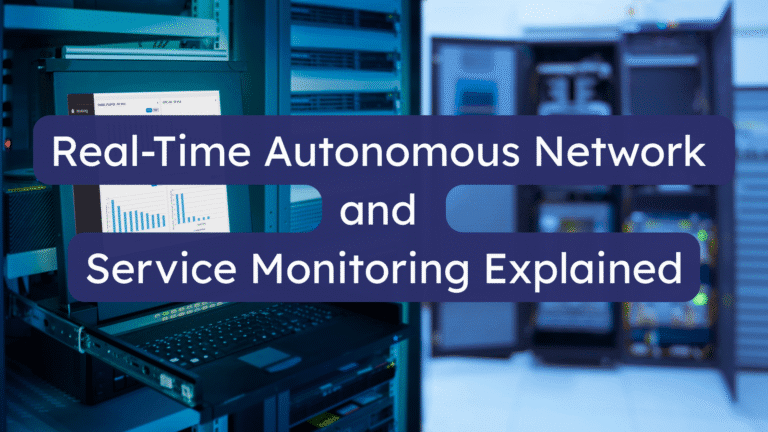
It’s hard to ignore how much things have changed. Everything, like people, devices, and services all is connected with each other. It makes sense why companies are starting to shift the way they look at their IT setup. Real-time autonomous monitoring? It’s not just some high-tech idea anymore. It’s already here. And honestly, most businesses can’t do without it. The mix of automation, AI, and fast data just works in the background, keeping everything stable before anything actually breaks. But what does this whole thing mean for IT teams? And more than that, how’s it changing the way they work day to day? Let’s explore this. What Is Real-Time Autonomous Network and Service Monitoring? Real-time autonomous monitoring isn’t just software; it’s like a system with its own instinct. One that doesn’t wait for something to go wrong. It notices small changes. Tracks the flow. And when something feels off, it acts. It works 24/7 quietly in the background, watching everything. No breaks, no delays No constant manual tweaking. No waiting for someone to catch the issue. It learns patterns over time, adapts, and fixes problems before they spread. It doesn’t need someone standing by. Whether it’s a sudden slowdown or a risk hiding deep inside the network, it finds it. And handles it. All on its own. Day or night. That’s how today’s systems stay smooth, connected, and smarter than ever before. How Does This Technology Improve Network Performance? The aim of IT Infrastructure is to keep services up and running. No interruptions. No downtime. Real-time autonomous monitoring helps make that happen. And it does it by doing: Instant Detection of Anomalies It’s always watching quietly, and constantly. The AI runs through streams of data in real time, picking up patterns and tracking behavior. And the moment something feels off, a sudden spike in CPU, strange traffic, maybe a bit of packet loss, it doesn’t hesitate. It flags the issue right there. Automated Resolution Once a problem shows up, the system moves fast. Depending on how bad things look, it might reroute traffic, restart a stuck service, or isolate the trouble before it spreads. All of it happens quietly in the background. No manual work. No delay. Just the network taking care of itself. Enhanced Scalability As a business grows, its network doesn’t just get bigger, it gets more complicated. But autonomous monitoring doesn’t struggle to keep up. It adjusts on its own. New users come in, more devices get added, services expand, and the system scales with it. No need to stop and reconfigure everything by hand. Reduced Downtime The faster you catch a problem, the faster you fix it. Real-time autonomous systems cut down the time it takes to detect issues and fix them drastically. No delays. No waiting around. And that means less downtime, fewer disruptions, and no panic about lost revenue or broken services. Can Real-Time Autonomous Monitoring Reduce Downtime? Yes, here’s how Corporate Technologies made it happen. A financial firm was growing fast, but its systems weren’t keeping up. Outages became routine. Their IT team? Swamped. Too many alerts and manual work. Things kept slipping through. Then they brought in Corporate Technologies. And everything changed. With real-time autonomous monitoring in place, the shift was instant. Issues got spotted early. Fixes happened on their own. Downtime dropped. Now, their team isn’t stuck chasing problems; they’re focused on strategy, growth, the stuff that matters. The network runs smoother, smarter, and scales right along with the business. All because they made the switch. Why Are Businesses Shifting to Autonomous Monitoring? It comes down to how complex everything’s become. Between hybrid clouds, IoT devices, edge setups, and remote teams, old monitoring tools just can’t keep up anymore. That’s why more businesses are turning to smarter systems like: Rising Customer Expectations People don’t have patience for slow or broken services anymore. They expect everything to just work smoothly, all the time. And when it doesn’t? They leave bad reviews, switch providers, or never come back. Autonomous monitoring keeps the experience consistent, so customers aren’t left waiting or frustrated. Growing Threat of Cyberattacks Attacks come out of nowhere, and by the time someone notices, damage is already done. But with autonomous systems, it’s different. They watch for unusual behavior in real time. And in many cases, they catch the threat before it even gets a chance to spread. Limited IT Resources It’s getting harder to find and keep experienced IT talent. Skilled professionals are in high demand. That’s where automation steps in. It takes over the repetitive, time-consuming tasks, so the team can finally focus on bigger goals instead of chasing routine problems. Cost Optimization Every minute of downtime hits hard. But with autonomous monitoring, those issues get stopped before they grow. Less downtime. Fewer disruptions. And over time, that means real savings and a much better return on every tech investment. Can Real-Time Autonomous Monitoring Work in Hybrid and Multi-Cloud Environments? Yes, that’s where it shines the most. These days, most businesses aren’t just in one place. Some stuff runs on-prem, some in public cloud, some in private. It’s all mixed. And older tools struggle to keep up with that kind of setup. Autonomous monitoring systems are built differently. They’re flexible. They pull in data from everywhere, through APIs, agents, and live telemetry. Doesn’t matter if it’s AWS, a virtual machine, a database, or some hardware sitting in a local rack. It all gets tracked. One place. One clear view. Total control. Does Autonomous Monitoring Eliminate the Need for Human Oversight? Not fully, but it changes the game. IT teams aren’t stuck in alerts or chasing logs anymore. Instead, they step into smarter roles. They review what the system finds, tweak the settings, and make decisions that push the business forward. It’s a shift. Routine stuff is handled by automation. People focus on the big things—security, performance, long-term goals.. How Secure Is Autonomous Network Monitoring? Security is the heart of an autonomous system. The best platforms lock things down
Nowadays, church data protection isn’t just some tech; it’s tied to something deeper. It’s about trust. It’s about doing things right. And honestly, it’s part of good stewardship, too. As churches lean more on online giving, streaming events, using cloud tools, and spreading the message digitally, they’re also gathering a lot of personal info. Stuff like donor names, how much they gave, their contact info, and sometimes, even things that touch on their personal or spiritual lives. Not only the big churches, but even small churches are dealing with this. You don’t need a fancy tech crew to start doing better. With the right tools and just a bit of direction, any church can tighten things up. So here’s where we’re heading with how churches can protect donor data and stay compliant in the digital age. Why Donor Data Protection Matters for Churches Whenever a church member donates online or signs up for a church activity, they’re sharing more than just a name or email. It could be card details, contact info, or even something personal about their faith. That’s what makes donor data compliance for churches so important. It’s not just about privacy. It’s about respect. When churches do their part and guard this information: How Can Churches Protect Donor Information? Here are a few steps to protect donor information Even basic church cybersecurity best practices can make a real difference. Things like teaching your staff what to look out for, keeping software updated, and making sure only the right people have access to sensitive info, they all work together to keep donor data protected. Common Risks Churches Face in the Digital Age Here are some of the top digital threats facing churches today: 1. Ransomware Attacks Hackers often view churches as easy targets. Outdated systems and limited security can leave your church vulnerable. 2. Phishing Scams One innocent click by a staff member or volunteer can expose sensitive data to attackers. 3. Data Leaks Without proper encryption and access controls, donor information can be leaked or stolen. 4. Compliance Violations Privacy laws like GDPR and CCPA apply to churches, too. Non-compliance can lead to a fine, even if unintentional. 5. Outdated Software Many churches still rely on spreadsheets or legacy systems. These tools can’t keep up with today’s security needs. Why Cybersecurity Should Be a Priority for Church Data Protection Cybersecurity’s not something churches can push aside anymore. A multi-campus church in Florida made a switch to a new donation system, hoping for better tools. But weak security opened the door to a phishing attack. Donor info got leaked. A few members even lost money through fake emails. They reached out to Corporate Technologies, and we stepped in quickly. Helped them lock down the system, added the right protections, and trained their team. It didn’t take long, within months, trust was back. Online giving went up by 20%. That’s the thing. A strong plan doesn’t just prevent problems. It shows people you’re serious about protecting them. 6 Practical Steps to Improve Church Data Security 1. Switch to a Secure Cloud-Based System Switching to a cloud system isn’t just about storage; it’s about safety too. The good ones come with encryption, permission controls, and backups built in. Just make sure it has two-factor login, so only the right people get in. 2. Train Staff and Volunteers in Cybersecurity Human error is a top cause of data breaches. Educate your team to: 3. Encrypt Sensitive Data All donor information, emails, payments, everything—should be encrypted. Whether it’s being sent or just sitting in a file, encryption helps keep it safe from the wrong hands. 4. Schedule Regular Backups Set automatic backups for donor records, financial files, and even sermon notes. Store them somewhere secure and not just on-site. One backup can save you from a big mess. 5. Conduct Annual Compliance Reviews Don’t assume data laws skip over churches. Rules like GDPR and CCPA still count. A yearly review helps you stay on track and avoid problems later on. 6. Partner with an IT Provider That Understands Churches You don’t need your IT team. A trusted partner, like Corporate Technologies, can handle backups, security checks, and compliance. We’ve helped churches stay safe without overcomplicating things. What Happens If Churches Ignore Donor Data Security? Failing to protect data can damage a ministry more than you might think: How Can Churches Keep Online Donations Safe This is how churches can keep online donations safe: These steps help ensure trust and secure giving. How to Begin Protecting Donor Data Today Start with a basic internal review: Then take these first steps: You don’t have to do it all alone. Get expert help from an IT provider who understands church needs. Final Thoughts The digital world’s opened a lot of doors for churches. New ways to reach out, grow the ministry, and serve people better than before. But with all that good, there’s more to protect now, too. Donor data isn’t just some tech detail anymore; it’s become a real part of how ministry works today. When a church steps up and takes security seriously, it’s not just protecting systems; it’s showing that trust matters. The kind of trust people give when they support, give, or just stay connected. That’s where Corporate Technologies fits in. Whether your systems are old and need fixing, or you’re just starting to figure things out, we’re here to help you move forward with less guesswork. So let’s build something stronger for your ministry. FAQs
Migrating your church to the cloud it’s basically moving everything digital you rely on, like member records, donations, live streams, and church management tools, from old systems or even paper, straight onto online platforms. These are no longer stored in a back office. They’re hosted remotely, and you can get to them anytime, just by logging in securely. Instead of dealing with outdated software or maintaining bulky servers on-site, churches get a cleaner, smarter setup. It keeps things running, protects your data better, and makes it easier to grow, especially if you’ve got more than one location or your ministry’s expanding faster than expected. Why Should ICP Churches Move to the Cloud? Key Benefit: Greater Flexibility, Cost-Savings & Scalability If you’re with International Church Planters (ICP) or running a big congregation, and 300 people show up every week, moving to the cloud isn’t just a tech upgrade. It’s a game-changer. You get access to serious tools that make day-to-day church work way easier. You’ve got remote access, so pastors, staff, even volunteers can pull up the stuff they need, wherever they are. Campuses stay in sync with real-time updates. No more scrambling around with outdated files or missed emails. And backups happen automatically. If something crashes, your data is safe. You also stop depending so much on volunteers trying to fix tech stuff they’re not trained for. Plus, no massive spending on equipment upfront, just pay as you use. The Cloud in Action at New Life Fellowship New Life Fellowship, part of ICP and now running three campuses, made the shift to a cloud-based Church Management System not long ago. Before that, things were kind of messy. They were dealing with duplicate records, couldn’t keep track of volunteers properly, and the communication problems between locations. Honestly, it wasn’t cutting it. But after moving to the cloud, things started clicking into place. They saw: What Problems Do Churches Face Before Migrating? Problem: Outdated Systems and Security Risks A lot of churches are still stuck using old-school software or paper records. The thing is, it’s not just slow, it’s risky too. On the ground, this is what folks are facing: Solution: Centralized, Secure Cloud Tools with Built-in Support Switching to the cloud helps churches bring all their tools under one roof. Most cloud systems come with built-in security, auto updates, and even 24/7 tech support, which is great if there’s no IT staff on hand. Main tools churches move to the cloud: How to Migrate Your Church to the Cloud: Step-by-Step Step 1: Conduct a Cloud Readiness Assessment Before anything, assess your current tech landscape. Take stock of: Step 2: Define Clear Migration Goals Work with senior leadership, operations managers, and trusted IT volunteers to clarify what the migration should achieve: Having focused goals helps in choosing the right cloud platforms. Step 3: Choose the Right Cloud Solutions Not every cloud platform works the same. You’ll want to look at a few key things before picking one: Look for church-focused IT service providers who understand your unique mission and ministry needs. Step 4: Plan the Data Migration Work with an IT consultant or trusted tech volunteer to: Step 5: Train Staff and Volunteers Don’t assume people will “figure it out.” Offer training via: Encourage a few tech-savvy members to serve as “cloud champions” during the rollout. Step 6: Monitor & Optimize Post-Migration After migrating: Can Small Church IT Teams Handle Cloud Migration? Yes, but they shouldn’t do it alone. Cloud migration isn’t just a technical move; it’s a ministry decision. With limited IT staff and overworked volunteers, managed IT services are often the smartest path. Outsourcing cloud migration and ongoing support helps: Does Moving to the Cloud Improve Church Security? Absolutely. Most ICP churches face real threats like: Cloud platforms typically include: This creates a stronger digital fortress than any volunteer-run setup could on its own. Why It Matters in the Long Run for Churches Moving to the cloud isn’t just some tech update; it’s really about helping your people better. When everything’s running through one system, leaders can: It gets your church ready for what’s next. Whether it’s adding new campuses or reaching further across borders, cloud systems let you grow without adding a bunch of extra cost or complication. Final Thoughts: For ICP churches and larger congregations, holding off on cloud migration makes things harder. Risks keep building, security slips, systems slow down, and people get frustrated. That kind of delay doesn’t help anyone. With proper guidance, cloud adoption turns into something manageable. It’s smoother, more secure, and keeps your focus where it should be, on ministry, not tech headaches. Need help planning your migration? Consider partnering with Corporate Technologies as we understand your values and vision. A strong cloud strategy isn’t just smart, it’s sacred stewardship. See Also IT Challenges Facing Churches IT Managed Services in the US Managed IT Services Oklahoma IT Managed Services Trends Managed IT Services for Healthcare Providers